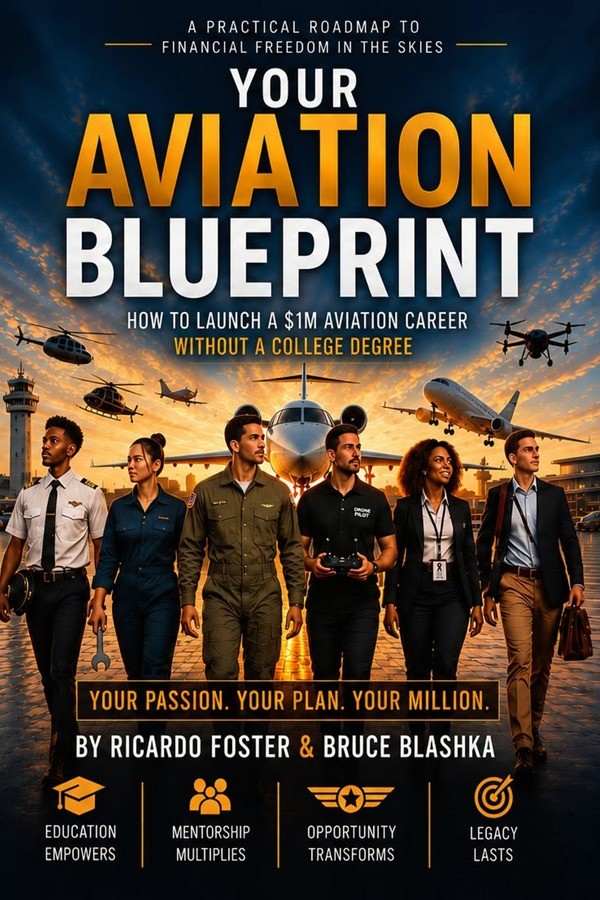
None of these require a four-year degree. All of them are short of people right now. Salaries are BLS May 2024 medians unless noted.
Airline & Commercial Pilot
$226,600 medianPrivate Pilot through ATP. The full ladder, certificate by certificate.
Aircraft Mechanic (A&P)
$78,680 medianCNBC's #1 best-paying job that requires no degree. LSRM and OJT pathways covered.
Air Traffic Controller
$144,580 → $228K supervisorThe highest no-degree median in aviation.
Drone Operator (Part 107)
Up to $215K (defense sector)Test at 14. Certificate at 16. Defense, survey, film, agriculture roles.
Avionics Technician
$75,100 medianElectronics, navigation systems, and the software that runs modern aircraft.
Military Aviation
Flight pay + BAH + pensionAll service branches. GI Bill and VR&E funded paths to the cockpit.
Flight Instruction
$60–$95/hr + benefitsCFI, CFII, MEI. Stay in the cockpit while building hours toward the airlines.
Aerospace & Ground Careers
$55K–$140K+Engineering, logistics, dispatch, operations — the careers that run the airfield.